

Table of Contents
In today’s competitive academic landscape, a well-structured research methodology is not just a formal requirement—it is the backbone of any successful research project. Whether you are working on a thesis, dissertation, or academic paper, your methodology determines the credibility, reliability, and impact of your work.
For students in India, where academic expectations are rising across universities and professional courses, understanding research methodology can be the difference between average and outstanding performance. This guide breaks down the concept in a practical, easy-to-understand way—while offering deeper insights that most generic blogs miss.

What is Research Methodology and Why It Matters
Research methodology refers to the systematic approach used to identify, select, process, and analyze information about a topic. It is not just about methods—it’s about the logic behind choosing those methods.
Key Purpose of Research Methodology
- Provides a clear research direction
- Ensures validity and reliability of results
- Helps avoid bias and errors
- Makes your research replicable and credible
Why Indian Students Must Focus on It
In many Indian universities, students focus heavily on theory but often overlook methodology. However, evaluators and professors pay close attention to how well your research is designed. A strong methodology section can significantly improve your academic scores and overall impression.
Types of Research Methodology
Choosing the right type of methodology is crucial. It depends on your research objective, subject area, and available data.
1. Quantitative Research
This method focuses on numerical data and statistical analysis. It is ideal for studies that require measurable outcomes.
Examples:
- Surveys with structured questionnaires
- Statistical analysis of data
- Experiments and numerical comparisons
2. Qualitative Research
This approach focuses on understanding concepts, experiences, or opinions.
Examples:
- Interviews
- Case studies
- Observations
3. Mixed Methods Research
A combination of both qualitative and quantitative approaches, offering a more comprehensive analysis.
Best for: Complex research problems where both data and human insights are important.
Key Components of a Strong Research Methodology
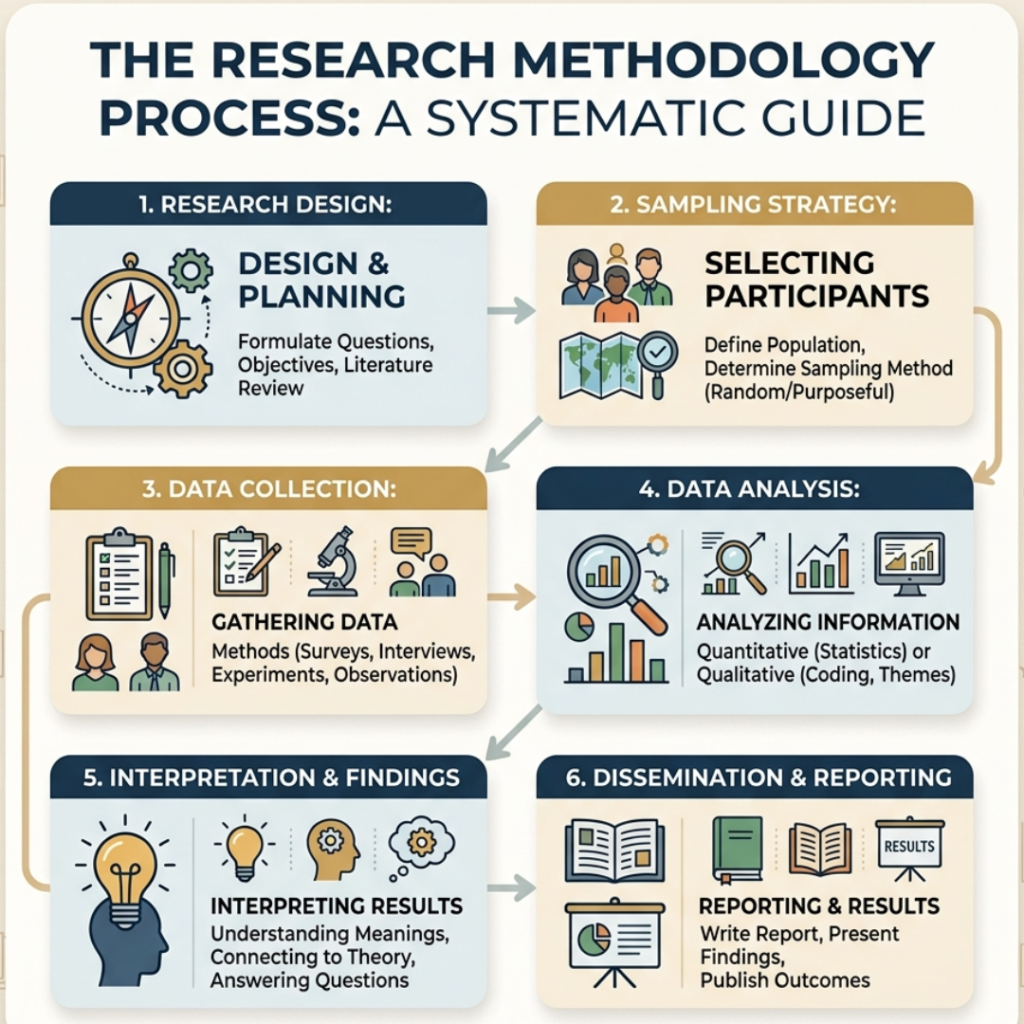
A well-written methodology section is structured and detailed. Here are the essential components every student should include:
1. Research Design
This defines the overall strategy of your research.
Types of research design:
- Descriptive
- Exploratory
- Experimental
Choose a design that aligns with your research objectives.
2. Data Collection Methods
Explain how you will collect data.
Primary Data Sources:
- Surveys
- Interviews
- Questionnaires
Secondary Data Sources:
- Journals
- Books
- Government reports
- Online databases
3. Sampling Techniques
Sampling determines how you select participants or data.
Common methods:
- Random sampling
- Convenience sampling
- Stratified sampling
In India, students often rely on convenience sampling due to limited resources—but it’s important to justify your choice academically.
Data Analysis Techniques and Tools
Once data is collected, analysis becomes critical. This is where many students struggle, but it’s also where your research truly comes to life.
Quantitative Analysis Tools
- SPSS
- Excel
- R or Python (for advanced students)
Qualitative Analysis Methods
- Thematic analysis
- Content analysis
- Narrative analysis
Practical Insight for Students
Don’t just mention tools—explain why you chose them. For example, using SPSS for statistical reliability or thematic analysis for interpreting interview responses adds depth to your work.
Common Mistakes Students Should Avoid
Even well-intentioned students often make avoidable mistakes in research methodology. Here are some critical ones:
1. Lack of Clarity
Many students describe methods without explaining their purpose. Always justify your choices.
2. Copy-Paste Approach
Using generic methodology templates can weaken your research. Your methodology should be tailored to your topic.
3. Ignoring Limitations
Every research has limitations. Acknowledging them shows academic maturity and honesty.
4. Weak Data Justification
Simply stating “data was collected through surveys” is not enough. Explain how, why, and from whom.
How to Write a High-Quality Methodology Section
Writing methodology is not just about listing steps—it’s about storytelling with logic and structure.
Step-by-Step Approach
- Start with research objectives
- Explain your research design
- Describe data collection methods
- Detail sampling techniques
- Mention tools used for analysis
- Address ethical considerations
Pro Tip for Indian Students
Align your methodology with university guidelines (APA, MLA, etc.) and ensure formatting consistency. Many students lose marks due to formatting errors rather than content quality.
The Role of Research Methodology in Academic Success
A strong research methodology does more than just fulfill academic requirements—it builds your research skills for future opportunities.
Long-Term Benefits
- Helps in competitive exams and higher studies (like PhD)
- Improves analytical and critical thinking skills
- Enhances professional research capabilities
In India’s evolving academic and job market, these skills are highly valuable across industries, from academia to corporate research roles.

Conclusion
Research methodology is not just a chapter in your thesis—it is the foundation of your entire research journey. By understanding its principles and applying them thoughtfully, you can create impactful, credible, and high-quality academic work. With expert guidance from FoxMinded, students can further refine their approach and ensure their research meets the highest academic standards.
For students in India, mastering research methodology is a powerful step toward academic excellence and career growth. Instead of treating it as a technical requirement, approach it as an opportunity to demonstrate your analytical ability and intellectual depth. With FoxMinded by your side, you gain the support and expertise needed to turn your research into a strong academic asset.
FAQ’s
1. What is research methodology in simple words?
Research methodology is the structured process used to collect, analyze, and interpret data for a research study.
2. What are the main types of research methodology?
The main types are quantitative, qualitative, and mixed methods research
3. Why is research methodology important for students?
It ensures your research is valid, reliable, and academically strong, helping you achieve better grades.
4. How do I choose the right research methodology?
Choose based on your research objectives, type of data needed, and subject area.